Listen to what your disposal does when you flip the switch. That single sound tells you almost everything. A steady hum with no grinding means something is physically jammed, blocking the flywheel from turning. Silence with no sound at all points to a power or electrical issue. And a disposal that spins normally but leaves water sitting in the sink means you’re dealing with a clog somewhere in the drain line, not the disposal mechanism itself.
These are two genuinely different problems, and mixing them up leads to wasted time troubleshooting the wrong thing. Here’s how to tell them apart quickly and safely.
The Core Difference Between a Jam and a Clog
A jam is mechanical. A clog is about drainage. That distinction matters more than it sounds like it should.
A jam means something solid, a bone fragment, a stray utensil, a fruit pit, is physically wedged between the spinning flywheel and the stationary grind ring inside the unit. The motor tries to turn. It can’t. That resistance is exactly what produces the humming sound.
A clog, on the other hand, means water and waste can’t move past a blockage somewhere in the drain line or trap below the disposal. The disposal itself might be spinning perfectly fine. The problem is downstream, not inside the grinding chamber at all.
Sound Is Your Fastest Diagnostic Tool
Before touching anything, just listen. Flip the switch for one second, then off again, and pay attention to exactly what you hear.
| What You Hear | What It Likely Means |
|---|---|
| Steady humming, no grinding sound | Jammed flywheel |
| Complete silence, nothing at all | Electrical issue or tripped breaker |
| Loud rattling or metallic clanking | A loose object bouncing inside the chamber |
| Normal grinding sound, but sink still backs up | Clog in the drain line, not a jam |
| Grinding sound followed by a sudden shutoff | Possible overheating protection kicking in |
Have you actually paused to listen carefully, or did you just assume “it’s broken” the moment something seemed off? That ten second pause changes your entire troubleshooting approach.
Signs You’re Dealing With a Jam
A jammed disposal is announcing itself pretty clearly if you know what to look for.
- A steady hum when you flip the switch, with zero grinding motion
- The unit feels like it’s straining, sometimes with a faint vibration you can feel through the sink
- Water may still drain slowly even while jammed, since the chamber sits above the drain trap
- The problem often started right after grinding something hard, bones, fruit pits, or a utensil that accidentally slipped in
This is genuinely time sensitive. A stalled motor can reach damaging internal temperatures in as little as five to ten seconds, since all that electrical energy is converting straight into heat instead of motion. The moment you hear a hum with no grinding, shut the unit off immediately. Don’t keep flipping the switch hoping it’ll work itself out.
Signs You’re Dealing With a Clog
A clog behaves completely differently, and it’s usually less urgent than a jam.
- The disposal spins and sounds completely normal, grinding away as expected
- Water still pools in the sink or drains unusually slowly afterward
- You might notice a foul odor building up over several days
- The issue tends to develop gradually rather than appearing suddenly after one specific incident
Worth knowing: Many kitchens run the dishwasher’s drain line through the garbage disposal connection. A clog in that shared line can affect both appliances at once, which is why a slow draining sink sometimes coincides with a dishwasher that’s also struggling to empty properly.
How to Safely Check for a Jam
Safety comes first here, every single time.
- Turn off the disposal at the wall switch.
- Cut power at the breaker as well. Don’t skip this step, even if the switch is off.
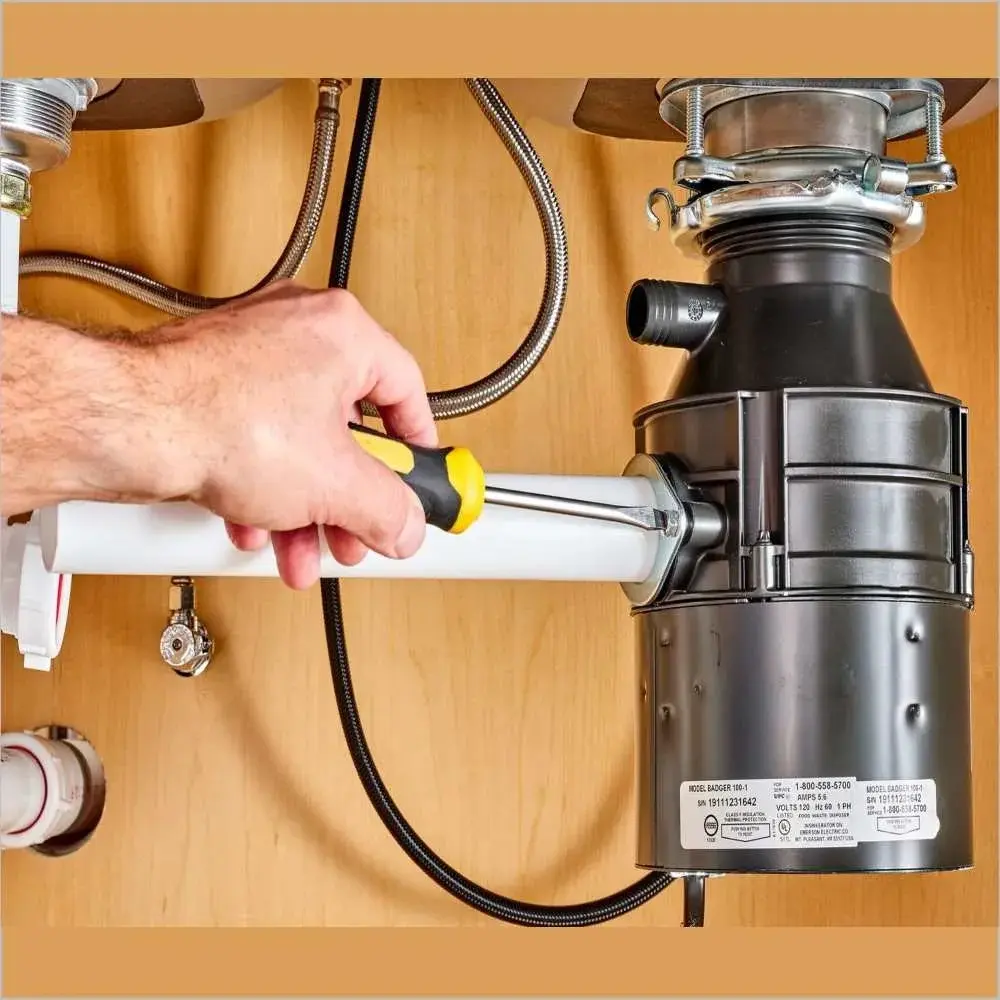
- Look underneath the sink for the small hex shaped hole in the center of the disposal’s base.
- Insert the offset wrench that came with your unit, or a comparable Allen wrench, into that hole.
- Turn it firmly back and forth until you feel the flywheel start moving freely.
- Once it turns without resistance, remove the wrench, restore power, and press the red reset button, usually located on the bottom of the unit.
- Run cold water and test the disposal briefly.
Never, under any circumstances, put your hand inside the grinding chamber, even with the power off. Use a wrench, a wooden spoon handle, or tongs to remove any visible object instead.
How to Safely Check for a Clog
Clogs require a completely different approach, since there’s no flywheel to free.
- Confirm the disposal spins normally first, this rules out a jam.
- Check whether water backs up specifically when running the disposal, or all the time, even without it running.
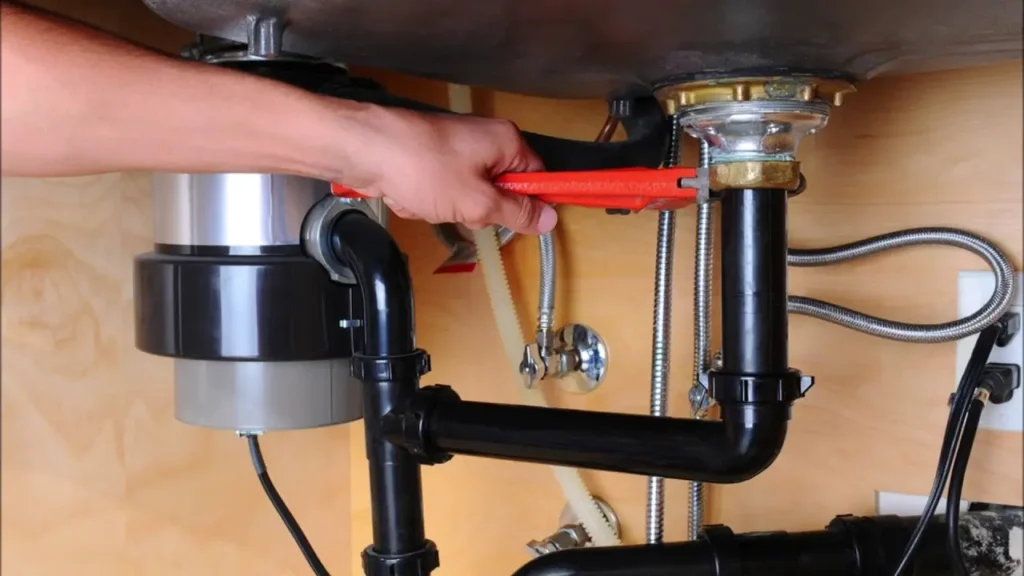
- If it’s just the disposal side, the clog is likely in the connection between the unit and the drain trap.
- A plunger, used carefully over the drain opening, can sometimes clear a shallow clog.
- If water backs up regardless of whether the disposal runs, the blockage is likely further down the line, potentially past the P trap, and this is where a plumbing snake or professional help becomes the more reliable option.
A Story Worth Knowing
A homeowner in Northeast Philadelphia once heard her disposal humming and assumed the entire unit had burned out. She was already researching replacements online before trying anything else.
The actual cause was a small chicken bone lodged between the flywheel and grind ring, likely dropped in accidentally during dinner cleanup. Following the safe reset sequence, wrench in the base socket, careful rotation, bone removed, reset button pressed, had the disposal running normally again in under five minutes.
That outcome is far more common than a genuine motor failure. Most humming disposals aren’t dying. They’re just stuck.
When to Stop Troubleshooting and Call a Professional
A handful of signs mean it’s time to bring in help rather than continuing on your own.
- The reset button won’t stay engaged or trips repeatedly after you press it
- The breaker trips more than once during your attempts
- You notice sparks, smoke, or a burning smell
- Water is leaking from the disposal housing itself, not just the drain connection
- The unit remains completely unresponsive even after confirming power is reaching it
- Grinding sounds continue even after you’ve cleared the visible jam
Preventing Jams and Clogs Before They Start
Never put bones, fruit pits, or fibrous vegetables like celery or corn husks down the disposal
Avoid pasta, rice, and bread, since they expand with water and can contribute to downstream clogs
Cut larger food scraps into smaller pieces before disposing of them
Run cold water before, during, and after every use, not just occasionally
Clean the disposal regularly to prevent buildup that contributes to both jams and odor over time
Frequently Asked Questions
Is a humming garbage disposal always jammed?
Almost always, yes. A hum with no grinding sound means the motor has power but the flywheel can’t turn, which is the defining sign of a mechanical jam rather than a clog or electrical failure.
Can a garbage disposal be both clogged and jammed at the same time?
Yes, and it happens more often than people expect. A jam in the grinding chamber and a separate clog further down the drain line can occur together, particularly in older plumbing systems.
Is it safe to reach into the disposal to remove a jam?
No, never, even with the power completely off. Always use the hex wrench, a wooden spoon handle, or tongs to clear an obstruction instead of your hand.
How long can I let my disposal hum before it’s damaged?
Only a few seconds. A stalled motor can reach damaging temperatures within roughly five to ten seconds, so turn it off the moment you hear a hum without grinding rather than letting it continue.
What To Do Next
A humming, clogged, or jammed disposal is almost never a sign you need a full replacement. In the majority of cases covered here, the fix takes minutes once you know what you’re actually dealing with.
Listen first. Match what you hear to the table above. Follow the safe reset sequence if it’s a jam, or check the drain path if it’s a clog. And if the problem keeps coming back after you’ve genuinely tried both, that’s the point where a professional diagnosis saves you more time than continuing to guess.