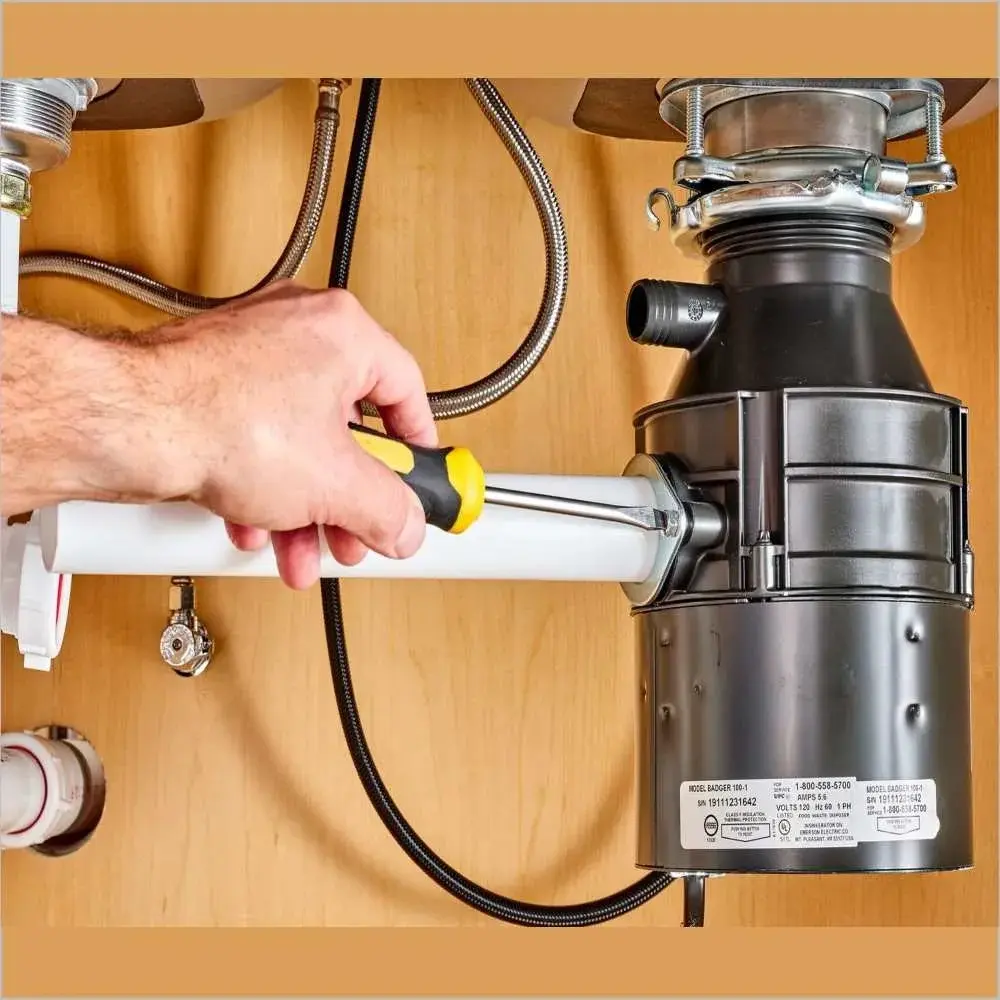
Baking soda followed by white vinegar, then a cold water flush and a handful of citrus peel, is the best all round homemade garbage disposal cleaner. It deodorises, lifts grease film, and scours residue, and it costs about forty cents per use.
But that answer comes with a caveat worth knowing.
There is no single best cleaner. There is a best cleaner for odour, a best one for grease, a best one for visible gunk, and a best one for sheer convenience. Reach for the wrong one and you will be back at the sink in three days wondering why the smell returned.
So let us sort them properly.
What Is Actually Causing the Smell?
Most people clean the wrong part of the machine.
They pour something down the drain, hear it fizz, and assume the job is done. Two days later the smell is back and they conclude the remedy failed.
It did not fail. It went to the wrong place.
The smell is rarely in the grinding chamber. It lives on the underside of the rubber splash guard, that black flap sitting in the drain opening.
Lift it with a flashlight and look at the top surface. Most people are genuinely shocked. That flap traps a film of food, fat, and bacteria that no poured liquid ever touches, because everything you pour runs straight past it.
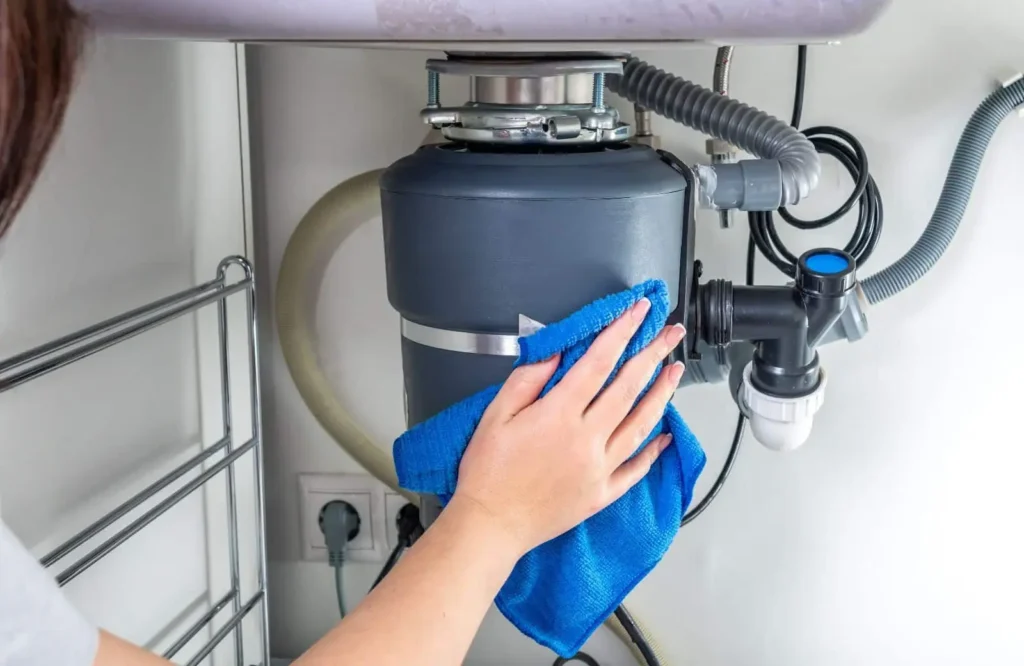
Try this now. Wet a cloth, add a drop of dish soap, fold the splash guard back, and wipe the underside. If the cloth comes away grey and the smell fades within the hour, you have found your culprit.
Second place for odour:
The small ledge just inside the chamber wall, above the flywheel, where debris sits above the water line and never gets flushed.
Keep both of those in mind, because the recipes below are chosen partly on whether they can reach them.
The Four Homemade Cleaners That Actually Work
Baking Soda and White Vinegar
Best for: overall maintenance, odour, and light grease.
The method. Pour one cup of baking soda into the chamber and leave it for ten minutes so it settles on surfaces rather than washing straight through. Then add one cup of white vinegar. Let it foam for fifteen to twenty minutes. Flush with warm running water for thirty seconds.
Why it works. The reaction produces carbon dioxide, and that foam physically lifts residue off the chamber walls. The baking soda is mildly abrasive and neutralises acidic odour compounds. The vinegar’s acetic acid cuts light mineral scale.
Why it matters for your appliance. Many disposals contain plastic components that harsh commercial cleaners degrade over time. This pairing gives you real cleaning action without touching seals or plastic.
The honest limitation. The reaction spends itself quickly and most of the foam heads straight down the drain. It cleans the chamber well. It does very little for the splash guard.
Upgrade tip:
Do the splash guard wipe first, then run this. The combination is far more effective than either alone.
Ice and Coarse Salt
Best for: built up gunk on the shredder ring and impellers.
The method. Drop in two cups of ice cubes and half a cup of coarse rock salt or kosher salt. Run cold water and switch the unit on for about thirty seconds until the grinding sound stops.
Why it works. This is the only homemade option that provides mechanical scrubbing. The ice fractures against the shredder ring and the salt crystals act as an abrasive carried by the ice. It reaches the parts a liquid simply flows past.
It sounds alarming. It is completely safe for the machine.
Actionable tip:
Use table salt only if that is all you have. The crystals are too fine to do much scouring. Coarse salt is the working ingredient.
Advanced version worth trying. Freeze white vinegar into an ice cube tray. You get abrasion and acid in the same pass. Keep a labelled tray in the freezer and you have a ready made cleaner on demand.
Citrus Peel
Best for: finishing, fragrance, and light oil cutting.
The method. Grind the peel of a lemon, lime, orange, or grapefruit with cold water running. Cut the peel into strips rather than dropping whole halves in.
Why it works. Citrus rind contains d limonene, an oil that genuinely cuts grease. It is not just scent. The peel itself is also slightly fibrous and abrasive.
The limitation. This is a finisher, not a cleaner. Grinding lemon into a filthy disposal gives you a lemon scented filthy disposal.
Tip that saves money:
Stop throwing away peel. Keep a bag of citrus rinds in the freezer and use one after every cook that produced grease.
Dish Soap and Hot Water Flush
Best for: grease specifically.
The method. Plug the drain. Fill the basin with a few inches of hot water and a generous squeeze of dish soap. Pull the plug and switch the disposal on as the water drains.
Why it works. The full basin of soapy water floods the chamber rather than trickling through it, and dish soap is formulated to emulsify fat. The volume matters more than the soap.
Important restraint:
Warm to hot water is fine here, but skip boiling water. Very hot water can soften plastic components, and on a greasy drain line it melts fat so it travels further and hardens somewhere less accessible.
The Combination That Beats All Four
If you want the single most effective homemade routine, run them in this order.
Step one. Wipe the underside of the splash guard with soapy cloth. Ninety seconds.
Step two. Ice and coarse salt, thirty seconds of grinding. This scours.
Step three. Baking soda, ten minute rest, then vinegar, twenty minute foam. This lifts and deodorises.
Step four. Soapy hot water basin flush. This carries everything out.
Step five. Citrus peel. This finishes.
Total active time is under five minutes. The rest is waiting.
Do this once a month and the question of what cleaner to use stops being relevant, because nothing will have built up.
What to Keep Out of Your Disposal
Some popular internet remedies are worse than doing nothing.
Bleach
It degrades rubber seals and the splash guard over repeated use, and if it meets any ammonia based cleaner residue in the trap it produces toxic gas. Skip it entirely.
Caustic drain openers
Wrong tool for cleaning, and genuinely harmful to the appliance. Sodium hydroxide and sulfuric acid corrode metal, warp seals, and make plastic brittle. Most manufacturers advise against them and using one can void your warranty.
Boiling water
Covered above. It relocates grease rather than removing it.
Eggshells
The persistent myth that they sharpen blades. Disposals have no blades, only blunt impellers, and shell fragments compact into a dense paste in the trap.
Coffee grounds
Often recommended for odour. They mask it briefly and build sludge steadily.
Essential oils on their own
Pleasant, and purely cosmetic. Fine as a finishing touch, useless as a cleaner.
Do Homemade Cleaners Beat the Commercial Ones?
An honest comparison.
Commercial disposal tablets and foaming packets are convenient and they work reasonably well on odour. They are also priced at several dollars for what amounts to a surfactant and a fragrance.
Homemade wins on cost, on ingredient transparency, and on mechanical cleaning. Nothing in a tablet scrubs the shredder ring the way ice and salt do.
Commercial wins on convenience only. If a tablet is what makes you actually clean the unit monthly, use the tablet. A routine you follow beats a better routine you skip.
Question worth sitting with:
When did you last clean your disposal at all? For most households the honest answer is never, and that matters far more than which recipe you pick.
A Note on Philadelphia Water
Worth knowing if you live here.
Philadelphia’s water carries enough mineral content to leave visible scale, and that scale builds inside disposals the same way it builds on your glassware and kettle.
Scale changes what your disposal needs. It gives food residue a rough surface to cling to, which means odour returns faster than it would in a soft water area.
The practical implication:
The vinegar step matters more here than it would elsewhere. Acetic acid dissolves mineral deposits, and in a hard water city that step is doing real work rather than just fizzing decoratively.
Tip for older rowhome kitchens
If your disposal shares a drain line with an ageing cast iron stack, odour sometimes comes up from the line rather than from the appliance. If a thorough clean makes no difference at all, the smell is probably not coming from the machine.
Three Habits That Keep It Clean Between Cleans
Run cold water for thirty seconds after the grinding sound stops. Most people switch off the moment it goes quiet. That leaves ground food sitting in the chamber and the first few inches of pipe, which is exactly where smells start. This single habit does more than any cleaner on this page.
Grind a little citrus after anything greasy. Bacon, roast fat, cheese sauce. Thirty seconds of peel costs nothing.
Leave the splash guard folded back when the sink is not in use. Letting it dry out kills the bacteria that generate the smell. It looks slightly odd. It works remarkably well.
Have you ever actually looked under that flap? If not, do it before you buy anything. It is the cheapest fix on this entire page.
When Cleaning Is Not the Answer
Some problems look like a cleaning issue and are not.
A smell that returns within a day of a thorough clean usually means stagnant water is sitting somewhere it should not, which points to a drainage fault.
A musty smell with slow draining means the issue is in the line, not the chamber.
A smell combined with dampness in the cabinet below means a leak, and leaks near the housing seam generally mean the unit needs replacing rather than cleaning.
A burning or electrical smell is not organic at all. Cut power at the breaker and stop.
Frequently Asked Questions
What is the best homemade garbage disposal cleaner?
Baking soda followed by white vinegar, then a cold water flush and citrus peel. Add ice and coarse salt for scrubbing.
How often should I clean it?
Once a month for most households. Fortnightly if you cook greasy food often.
Does vinegar damage a garbage disposal?
No. Diluted acetic acid in ordinary household use is safe for the materials involved.
Can I use bleach?
Not recommended. It degrades rubber components and carries a gas risk if mixed with other residues.
Why does the smell come back so fast?
Almost always the underside of the splash guard, which poured cleaners never reach.
Do lemon peels actually clean anything?
Yes, mildly. The oil in citrus rind cuts grease. Treat it as a finisher rather than the main event.
The Best Homemade Garbage Disposal Cleaning Method
Wipe the flap. Scour with ice and salt. Lift with baking soda and vinegar. Flush with soapy water. Finish with citrus.
That routine costs pennies, takes five minutes of actual effort, and outperforms anything you can buy in a packet.
The recipe was never really the hard part. Doing it at all, once a month, is.
And if the smell survives a proper clean, stop scrubbing and start looking at drainage, because at that point you are treating a symptom that lives somewhere else entirely.