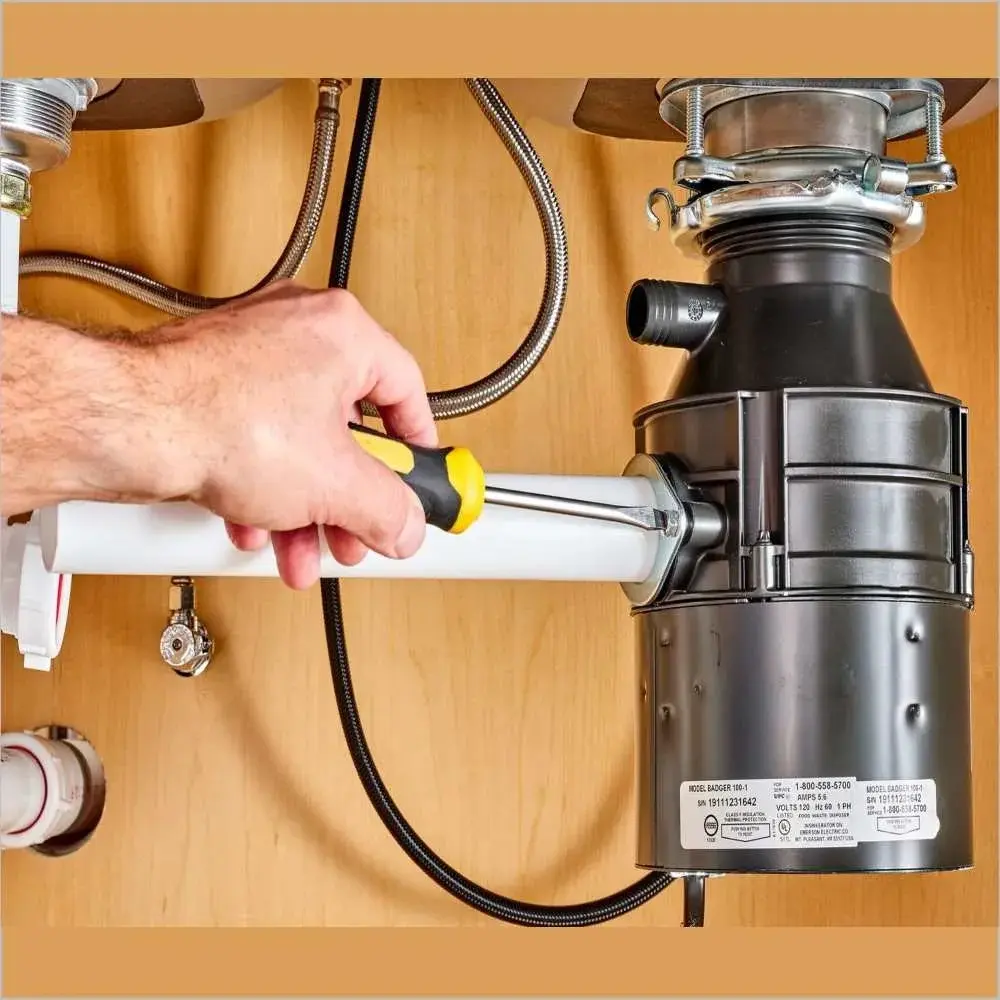
A leaking garbage disposal almost always means one of three seals has failed: the sink flange seal at the top, a drain or dishwasher connection at the side, or an internal seal inside the unit itself. Which one you’re dealing with determines whether this is a five minute fix or a full replacement.
Here’s how to find out, and why Philadelphia’s older plumbing setups make this a particularly common call.
The Fastest Way to Find the Actual Leak Source
Before assuming the worst, do this simple test. It takes about two minutes
The paper towel test:
- Dry the entire area under the disposal completely.
- Wrap a dry paper towel around the top of the unit, right where it meets the sink flange.
- Wrap a second one around the side connections, where the drain pipe and dishwasher hose attach.
- Fill the sink partway with water, then run the disposal briefly.
- Check which paper towel got wet first.
This single test tells you almost everything. A wet towel at the top points to the flange. A wet towel at the side points to a connection. If both stay dry but water is still pooling at the very bottom of the unit, you’re looking at an internal seal or a cracked housing, and that’s a different conversation entirely.
Have you actually done this test yet, or have you been guessing based on where the puddle happens to collect? Puddles travel. The actual leak point is often higher up than where the water ends up.
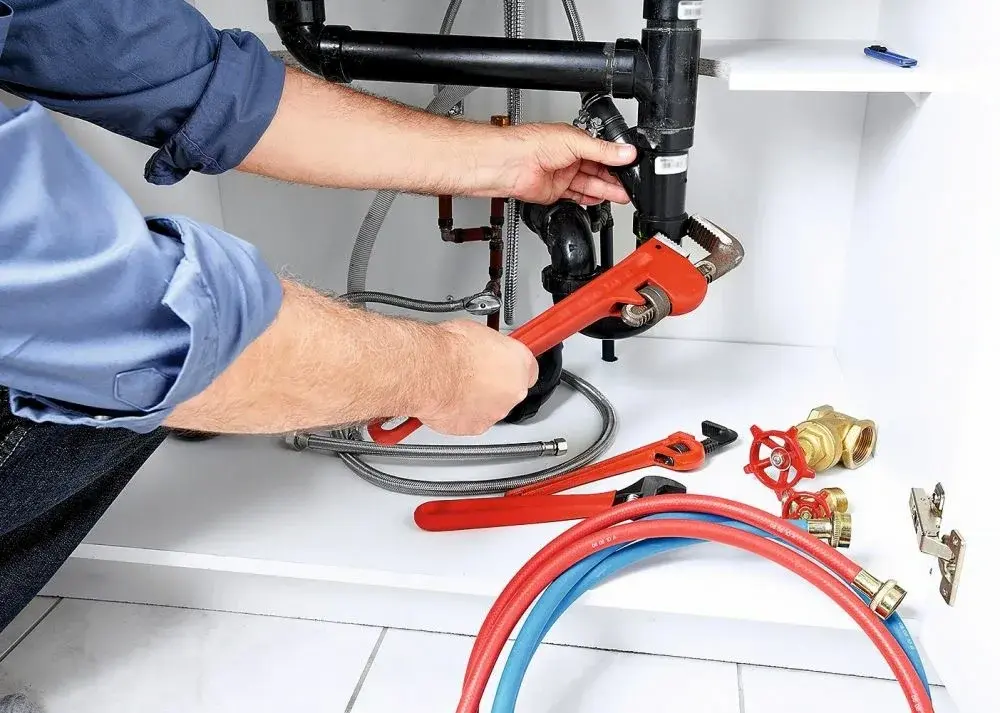
Cause 1: A Failed Sink Flange Seal (Leaking From the Top)
This is, by a wide margin, the single most common cause of a leaking disposal.
The metal flange that sits inside your sink drain is sealed with plumber’s putty and held tight by a mounting assembly underneath. Over years of use, that putty dries out and cracks, or the mounting bolts simply work themselves loose.
How to confirm it’s this: grab the flange from underneath and gently twist or rock it. If it moves independently of the sink, rather than staying rock solid, the seal has failed.
The fix involves fully detaching the disposal, removing the old putty, applying a fresh bead, and reseating the flange with the mounting hardware tightened evenly. It’s a genuinely doable weekend project for a comfortable DIYer, though it does require briefly disconnecting the unit.
Cause 2: A Worn Side Connection (Leaking From a Pipe or Hose)
If your paper towel test pointed to the side, the leak is coming from where the disposal connects to either your main drain line or, if you have one, your dishwasher’s drain hose.
Common culprits here:
- A loosened clamp on the dishwasher discharge tube
- A cracked or brittle gasket inside the drain pipe joint
- Corroded or stripped screws that no longer hold the connection tight
Worth knowing: the dishwasher connection specifically is a common source homeowners overlook, since it’s easy to assume any leak near the disposal must be coming from the disposal itself. Sometimes it’s actually your dishwasher’s plumbing, not the disposal, that needs attention.
The fix is often as simple as tightening a loose clamp with a screwdriver. If the gasket inside the joint is visibly cracked or brittle, replacing it is inexpensive and straightforward.
Cause 3: Failed Internal Seals or Housing Cracks (Leaking From the Bottom)
This is the one that usually means replacement, not repair.
Inside the disposal, rubber seals protect the motor housing and the grinding chamber from water exposure. These seals wear out with age, typically becoming a real risk once a unit passes the five to seven year mark, and there’s genuinely no practical way to replace them without specialized parts most homeowners can’t source.
Less commonly, the metal housing itself can crack or corrode from years of exposure to moisture, food acids, and cleaning chemicals. Once that happens, water finds its way out regardless of how tight every other connection is.
If your paper towel test showed dry towels at both the top and the side, but water is still collecting at the very bottom of the unit, this is almost certainly your answer. At this point, repair rarely makes financial sense compared to installing a new unit.
Why Philadelphia Rowhomes See This Issue So Often
A few things about the city’s housing stock make disposal leaks show up more frequently, and get noticed later, than in newer construction elsewhere.
Older supply and drain lines
Many Philadelphia rowhome kitchens still run on plumbing installed decades before garbage disposals became standard equipment. Retrofitted connections between old pipe materials and modern disposal units don’t always seal as cleanly as a system designed for the unit from the start.
Tighter under sink cabinetry
Narrower rowhome kitchens often mean less clearance under the sink, which makes a slow leak harder to spot early. A leak that would be obvious in a spacious modern cabinet can go unnoticed for weeks in a cramped one, quietly soaking into cabinet wood the whole time.
Shared or older cabinet materials
A lot of original rowhome cabinetry wasn’t built with moisture resistant materials in mind. Left unaddressed, even a minor leak can lead to swelling, warping, or mold growth faster than it would in newer, moisture treated cabinetry.
A Story Worth Knowing
A homeowner in Passyunk Square once noticed a faint musty smell under her sink for a couple of weeks before finally investigating. She assumed it was simply an old cabinet smell, common enough in a home built decades earlier.
The actual cause was a slow leak at the flange connection, dripping so gradually it never formed an obvious puddle, just steady dampness soaking into the cabinet floor over time. By the time it was caught, the cabinet base needed replacing along with the disposal seal itself.
A five minute paper towel test, done a few weeks earlier, would have caught it before any wood damage occurred at all.
What to Do the Moment You Notice a Leak
Turn off the disposal at the switch immediately.Shut off power at the breaker if you plan to inspect it yourself, water and electricity are a genuinely dangerous combination.
Dry the area completely and run the paper towel test above.
Check for visible water stains, swelling, or a musty smell on nearby cabinet wood, this tells you how long the leak has likely been present.
If the leak is at the flange or a side connection and you’re comfortable with basic tools, these are reasonable DIY fixes.
If water is coming from the bottom of the unit itself, plan for replacement rather than repair.
Signs You Should Call a Professional Rather Than DIY It
The leak source isn’t clear even after the paper towel test
Water is coming from the very bottom of the disposal body
You notice rust, corrosion, or visible cracks on the unit
The cabinet floor is already showing signs of water damage
You’re not fully comfortable disconnecting plumbing and electrical components safely
Frequently Asked Questions
Why is my garbage disposal leaking from the bottom?
This usually means an internal seal has failed or the housing has developed a crack, both typically age related and generally not repairable, meaning the unit likely needs replacement rather than a fix.
Can I fix a garbage disposal leak myself?
Leaks at the sink flange or a side drain connection are often manageable DIY repairs with basic tools. Leaks from the bottom of the unit almost always mean replacement is the more practical path.
How do I know if the leak is from my disposal or my dishwasher?
The paper towel test described above is the fastest way to tell. Check both the disposal’s side connection and your dishwasher’s drain hose separately, since they’re easy to confuse.
How urgent is a garbage disposal leak?
More urgent than it might seem. Even a slow, minor leak can quietly cause cabinet water damage and mold over several weeks, especially in the tighter under sink spaces common in older Philadelphia kitchens.
Where Garbage Disposal Leaks Usually Start
A disposal leak comes from one of three places: the flange at the top, a side connection, or the internal seals at the bottom. The paper towel test tells you which one in under two minutes. Top and side leaks are often DIY friendly. Bottom leaks usually mean it’s time to replace the unit.
When a Garbage Disposal Leak Needs Professional Attention
A leaking garbage disposal isn’t a mystery once you know where to look. Run the paper towel test before assuming anything, since guessing based on where a puddle collects often points you in the wrong direction entirely.
If you’re in an older Philadelphia rowhome, don’t wait on a slow drip the way it’s tempting to. Tight cabinet spaces hide leaks well, and by the time the smell gives it away, the damage has usually already started.