The most common dryer problems are a unit that refuses to start, one that runs but produces no heat, one that stretches a single load into an hour long ordeal, one that shuts itself off mid cycle, and one that suddenly starts making a sound it never made before. Nearly every one of these traces back to just four things. Power. Airflow. A worn part. Or a safety mechanism doing precisely what it was engineered to do.
That last point deserves more attention than it usually gets. A dryer that won’t start isn’t always failing. Sometimes it’s protecting itself, and you, from a problem building somewhere out of sight.
Here’s each symptom, broken down by what’s genuinely happening beneath it and what to check first.
Problem 1: The Dryer Won’t Start at All
Press start, and nothing happens. No hum. No tumble. Complete silence.
Check these first.
- Is the door closing all the way? Most modern dryers refuse to engage unless the door switch registers a full, solid latch.
- Has the breaker tripped? Electric dryers draw serious power through a dedicated 240 volt circuit, and that circuit occasionally trips without any obvious warning.
- Is the start button itself simply worn down? On older units, this small mechanical failure happens more often than most people expect.
If power and the door both check out, the cause is usually something internal, a failed door switch, a worn start switch, or a blown thermal fuse quietly interrupting the circuit.
Have you actually confirmed power is reaching the outlet, or did your mind jump straight to assuming the dryer itself had failed? That single check resolves more of these calls than anything else on this list.
Problem 2: The Dryer Runs but Won’t Heat
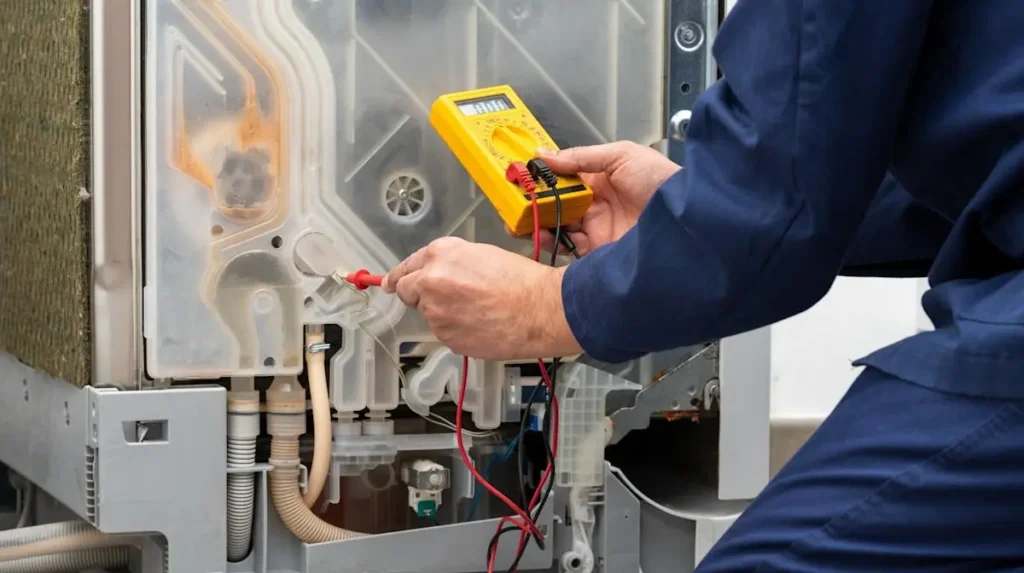
Of everything reviewed across ten separate repair resources, this single complaint appears more often than any other, and for good reason. It happens constantly, and it carries more possible causes than any other symptom here.
The most frequent root cause, by a wide margin, is a clogged vent.
Lint doesn’t simply gather in the trap and stop there. It travels further, settling inside the duct itself, particularly around bends, transitions, and long horizontal runs. Once airflow becomes restricted enough, the dryer’s internal safety systems sense that heat isn’t escaping properly and cut the heating element off entirely, often by sacrificing a small, inexpensive safety component called a thermal fuse.
Other frequent causes include:
A blown thermal fuse, which is often less a random failure and more a direct consequence of the vent clog above
A failing heating element, simply worn out from years of steady use
Partial power delivery, since electric dryers require the full 240 volts to generate heat, and a partially compromised breaker can let the drum spin freely while producing nothing warm
A closed gas valve, specific to gas dryers, which allows the drum to tumble entirely normally while producing zero heat whatsoever
A simple, genuinely useful test
run the dryer through ten minutes of a normal heat cycle, then step outside and hold your hand near the exterior vent hood. Strong, warm airflow confirms a clear path. Weak, barely noticeable warmth is a strong signal that something’s obstructing the duct.
Problem 3: Clothes Take Far Too Long to Dry
This differs meaningfully from a dryer that produces no heat at all. Here, heat is present, just not enough of it, or not efficiently enough, to complete a normal cycle in a normal amount of time.
Common causes:
- A partially restricted vent, limiting airflow without blocking it outright
- An overloaded drum, preventing clothes from tumbling freely and drying at an even pace
- A heating element that’s degrading gradually rather than failing all at once
- Moisture sensors inside the drum coated in residue, quietly throwing off the dryer’s ability to judge doneness
That last cause tends to surprise people the most. Fabric softener and dryer sheet residue accumulates on these small metal sensor strips over time, and once coated, the dryer genuinely can’t tell when a load has actually finished drying.
A quick, worthwhile fix
gently wipe the moisture sensor strips, typically located near the lint trap opening, using a soft cloth and a touch of rubbing alcohol.
Problem 4: The Dryer Shuts Off Mid Cycle
This one tends to alarm people more than it should, largely because it’s often the dryer performing exactly the function it was built for.
Most dryers include a safety thermostat designed to cut power the moment internal temperatures climb too high, almost always the direct result of restricted airflow. Rather than allow the unit to keep overheating unchecked, it shuts itself down proactively.
What this genuinely signals
The vent needs immediate attention. This is not a symptom worth working around by simply restarting the cycle again and again. Repeated overheating ranks among the more serious safety concerns tied to dryer upkeep, not a minor inconvenience to shrug off.
Problem 5: Unusual Noises During a Cycle
Some sound is entirely expected. A soft, steady hum. The gentle rhythm of a load tumbling through its cycle. What deserves real attention is anything unfamiliar, particularly a noise that arrived suddenly.
Squealing or a high pitched whine
typically points to worn drum rollers or a belt beginning to slip
Loud, repetitive thumping
usually means something has shifted inside the drum, sometimes something as small and forgettable as a stray button or coin
Grinding or a metallic scraping sound
often signals worn bearings or a support roller that’s finally given out
A sharp, intermittent rattle
- is frequently something loose and small, a coin, a zipper pull, caught between the drum and the surrounding housing
Checking pockets before every single load sounds almost too obvious to mention, yet it genuinely eliminates a meaningful share of these noise complaints before they ever start.
A Story Worth Knowing
A homeowner in North Philadelphia once described her dryer shutting off partway through nearly every cycle for close to two weeks straight. Convinced the motor was on its way out, she’d already begun pricing replacements.
The actual cause was a vent duct so densely packed with lint that almost no air was escaping the exterior hood at all. Once it was thoroughly cleared, the dryer completed a full cycle without a single interruption, no parts replaced, no motor issue in sight.
That outcome plays out often enough to be worth remembering. A dryer that appears to be failing mechanically is frequently just fighting for air it can’t get.
Why This Pattern Shows Up So Often in Philadelphia Homes
A considerable number of Philadelphia dryers sit in basements or converted laundry closets connected to longer, more winding vent runs than the original layout was ever designed to accommodate, particularly in rowhomes that have been divided or renovated across the decades.
Longer, bent duct paths trap lint far more readily than a short, straight run ever would. That reality explains a great deal of why vent related symptoms, sluggish heating, unusually long dry times, and mid cycle shutoffs, appear so consistently across this specific style of housing.
A Simple Diagnostic Order Worth Following
Rather than guessing at random, work through these steps in sequence before assuming any part has genuinely failed.
- Confirm the door is closing and latching completely
- Check the breaker and confirm the outlet is actually delivering power
- Clean the lint trap thoroughly, not with a quick, half hearted swipe
- Test airflow at the exterior vent while a cycle is actively running
- If airflow feels weak, clean the entire vent duct before touching anything else
- If airflow is strong and heating still fails, the issue likely lives in one specific internal part
Preventive Habits That Meaningfully Reduce These Problems
Clean the lint trap before every single load, without exception
Have the full vent duct professionally cleaned at least once a year
Avoid overloading the drum, even when the laundry has piled up
Check pockets for loose items before every cycle begins
Wipe down moisture sensors every few months to keep drying cycles accurate and efficient
Frequently Asked Questions
What is the most common reason a dryer stops heating?
A clogged vent tops the list by a significant margin. Restricted airflow triggers the dryer’s built in safety systems, which can blow a thermal fuse and eliminate heating entirely, even as the drum continues tumbling as if nothing were wrong.
Why does my dryer shut off before the cycle finishes?
This typically points to a safety thermostat responding to excess heat, almost always caused by a blocked or restricted vent rather than an electrical fault elsewhere in the system.
Is it normal for a dryer to make some noise?
Yes, a soft hum or steady tumbling sound is entirely expected. Squealing, grinding, or a sudden burst of loud thumping are the sounds genuinely worth investigating.
How do I know if I need a technician instead of troubleshooting myself?
If you’ve thoroughly checked the vent, the lint trap, and the power supply and the problem still persists, or if you notice a burning smell or the breaker keeps tripping, that’s the moment to stop troubleshooting and bring in a professional.
What to Remember About Common Dryer Problems
Most dryer problems settle into one of five recognizable patterns. Won’t start. Won’t heat. Dries too slowly. Shuts off early. Makes noise it never used to make. Nearly all of them trace directly back to airflow, power, or one specific worn part rather than some unexplainable mystery failure.
Final Thoughts on Diagnosing Dryer Issues
A dryer acting up rarely fails without warning first. More often than not, it hands you a specific, recognizable symptom that points fairly directly toward a specific cause, provided you know what to actually look for.
Start with the vent and the lint trap before assuming the worst. In a genuinely large share of cases, that’s exactly where the real problem has been quietly hiding the entire time.