Your refrigerator is sweating. Not you, the fridge itself, with beads of water running down the door and pooling on your kitchen floor every single afternoon.
You’ve wiped it down a dozen times. You’ve checked the door seal. You’ve even wondered if you need a new appliance altogether.
But here’s something most homeowners never think to check: the humidity in the air around your fridge might be the real culprit, and it has almost nothing to do with the appliance being broken.
Why Pennsylvania’s Climate Is Tougher on Refrigerators Than You Think
Philadelphia sits in a humid subtropical climate zone. That means long, sticky summers where the air holds far more moisture than most people realize, often reaching 60 to 80 percent relative humidity during peak season.
Add in older rowhomes with tight kitchens, limited airflow, and basements that trap dampness, and you’ve got a recipe for appliances working harder than they should.
Refrigerators are built to fight heat. They’re not always built to fight the extra moisture load that comes with a Mid-Atlantic summer, especially in homes without central air conditioning or proper ventilation.
The Science Behind Humidity and Cooling
Every refrigerator works by pulling warm air out and replacing it with cold air. When you open the door in a humid kitchen, moisture-heavy air rushes in.
That moisture has to go somewhere. Some of it condenses on cold surfaces inside the unit. Some of it settles around the compressor and coils.
Over time, this added moisture forces your compressor to run longer and more often just to maintain a safe internal temperature. That means higher energy bills and more wear on parts that were never designed to handle constant condensation.
Have you noticed your refrigerator running almost nonstop in July compared to how quiet it is in January? That’s not your imagination. That’s humidity doing exactly what it does.
Signs Your Refrigerator Is Struggling With Humidity
Not sure if moisture is actually the problem in your kitchen? Here are the warning signs Philadelphia homeowners report most often during humid stretches:
- Water droplets or pooling around the base of the fridge
- A musty smell coming from inside the unit or from behind it
- Ice buildup inside the freezer compartment, even with the door closing properly
- The compressor running longer and louder than usual
- Food spoiling faster than expected despite proper temperature settings
- Rust starting to form on the back panel or coils
Any one of these on its own might not mean much. Two or three happening together during a heat wave is a strong signal that humidity is playing a role.
Real Philadelphia Homes, Real Humidity Problems
Think about a typical South Philly rowhouse kitchen. Narrow galley layout, one small window, and a refrigerator tucked into a corner with barely six inches of clearance on either side.
That setup traps heat and moisture around the appliance instead of letting it dissipate. The fridge ends up working inside its own personal sauna every August.
Now picture a basement fridge in a Northeast Philadelphia rowhome, the kind used for overflow beverages and holiday leftovers. Basements naturally hold more moisture than the rest of the house, especially in older homes without proper vapor barriers.
Homeowners in both situations often assume the appliance itself is failing. In reality, the environment around it is working against it every single day.
How Humidity Damages Specific Refrigerator Parts
Humidity doesn’t attack a refrigerator all at once. It wears down specific components over time, and each one affects performance differently.
Door Seals and Gaskets
The rubber gasket around your refrigerator door is your first line of defense against outside air. In humid conditions, condensation can form along the seal, leading to mold growth and gradual breakdown of the rubber itself.
Once a gasket loses its seal, warm humid air leaks in constantly, and your fridge has to work even harder just to keep up.
Condenser Coils
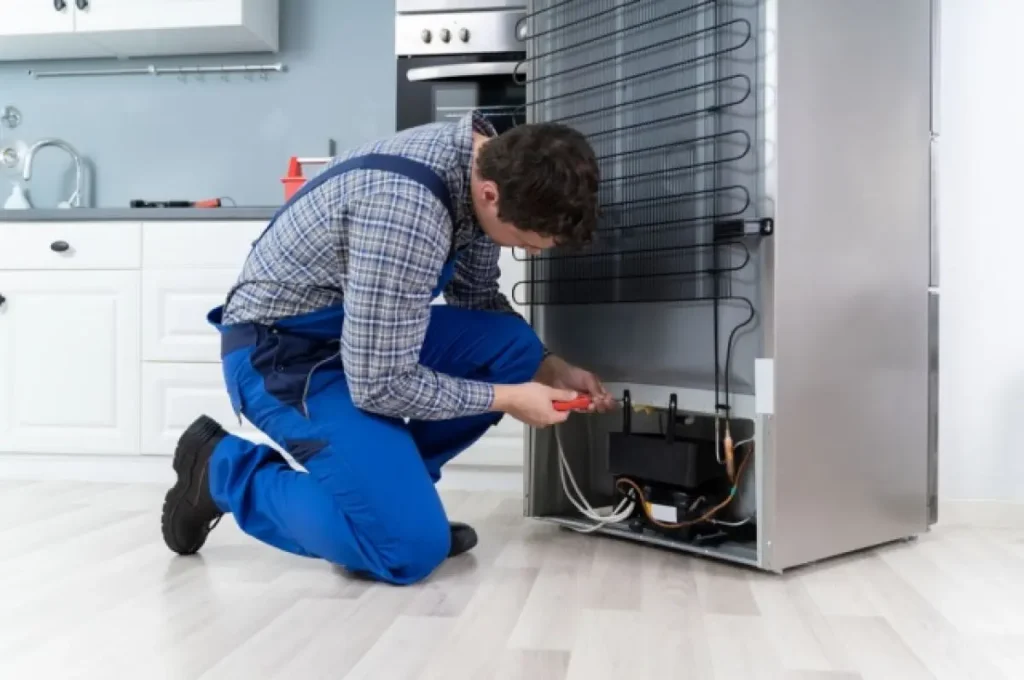
Condenser coils release heat from inside the fridge to the outside air. When humidity is high, dust and moisture combine to form a sticky film on these coils.
That film acts like insulation, the opposite of what you want, and it forces the compressor to run longer to compensate.
Evaporator Fan and Defrost System
Inside the freezer, the evaporator fan and defrost heater manage frost buildup. Excess humidity means more frost forms faster than the defrost cycle can clear it.
Over time, this can lead to ice blockages that restrict airflow, uneven cooling, and in some cases, complete evaporator fan failure.
Practical Ways to Protect Your Refrigerator From Humidity
You don’t need to overhaul your kitchen to fight back against humidity. A few consistent habits go a long way.
- Keep at least two inches of clearance around the back and sides of your fridge for airflow
- Wipe down door seals weekly during summer months to prevent mold buildup
- Use a small dehumidifier in basement kitchens or laundry rooms with a fridge
- Avoid propping the door open while unloading groceries, especially on humid days
- Clean condenser coils every six months using a vacuum attachment or coil brush
- Check that your kitchen exhaust fan is working properly to reduce ambient moisture
Small habits like these can meaningfully extend the life of your appliance and keep energy bills from spiking every summer.
When to Call a Professional vs When to DIY
Wiping down a seal or vacuuming coils is something almost anyone can handle on a weekend afternoon. But some humidity-related symptoms point to a bigger issue underneath.
If your fridge is still pooling water after you’ve addressed clearance and airflow, or if you’re seeing frost buildup that returns within a day or two of clearing it, that usually means a mechanical part, a door gasket, a defrost heater, or a fan motor, is already failing.
At that point, continuing to run the appliance can lead to compressor strain, higher repair costs down the road, or spoiled food during a Philadelphia heat wave when you can least afford it.
A trained technician can pinpoint whether the issue is environmental, mechanical, or a combination of both, and give you an honest read on repair versus replacement before the problem gets worse.
Final Thoughts: Don’t Blame the Fridge Before You Blame the Air
Pennsylvania’s humid summers put real strain on refrigerators in ways most homeowners never expect. Water pooling, musty smells, and a compressor that never seems to rest aren’t always signs of a broken appliance. Sometimes they’re signs of an appliance fighting a climate battle it wasn’t fully built for.
The good news is that a handful of small changes, better airflow, regular coil cleaning, and keeping an eye on your door seal, can make a real difference before you ever need to pick up the phone.
But if the symptoms stick around after you’ve done your part, don’t wait until a full breakdown during the hottest week of the year. A quick inspection now can save you a spoiled fridge full of groceries later.